
These conversations were assembled by Greg Ford and edited for length and clarity.
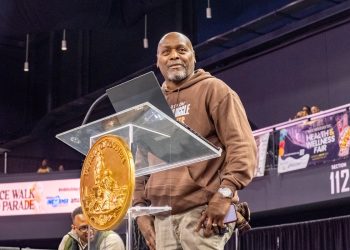
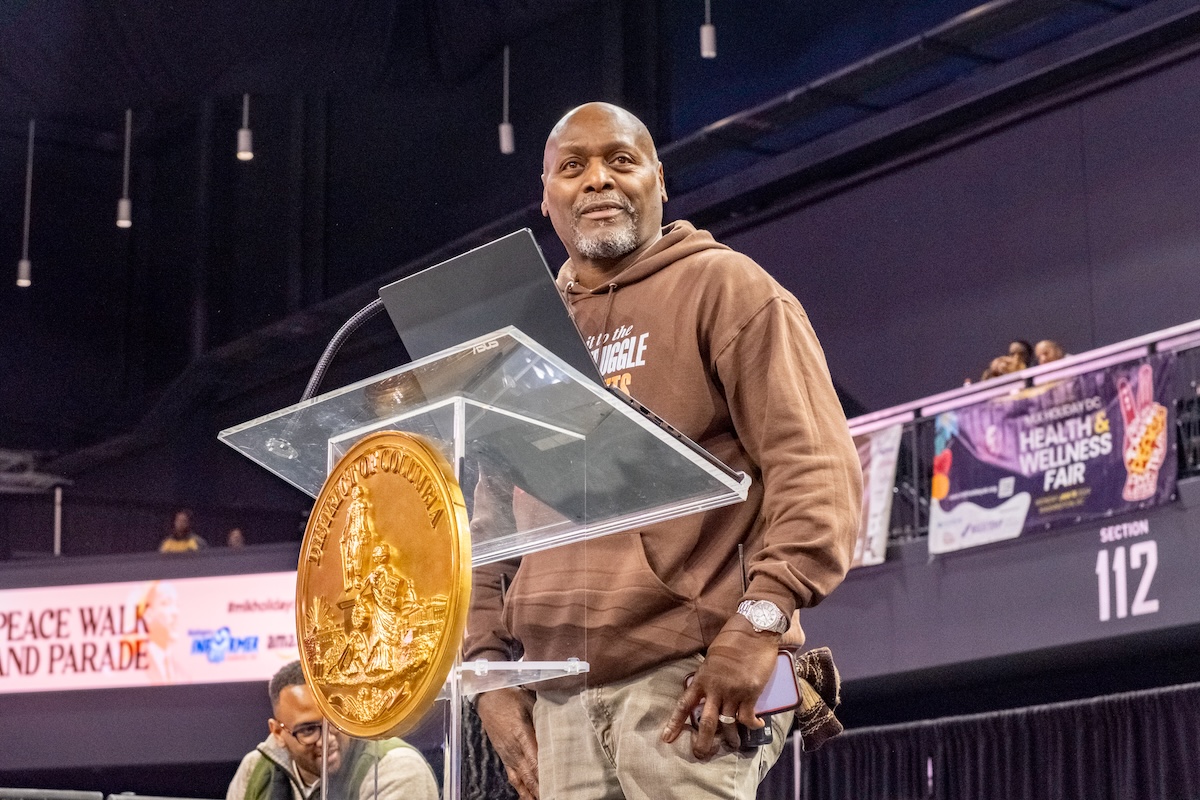
In recognition of Prostate Cancer Awareness Month, Stuart Anderson, Lamont Mitchell (the Chair of the Anacostia Coordinating Council and founder of Know Your Numbers DC), Arrington Dixon (former chair of the Council of the District of Columbia) and Jimmy Williams (Washington Literacy Center) — four Black men who live east of the Anacostia River — answered questions about their journeys with the disease.
The men discuss their diagnosis stories, treatment plans, and stigma behind prostate cancer.
With September’s recognition working to raise awareness, they also address the need for routine testing, early diagnosis and deserving the highest quality of care.

Recent research reveals Black men are disproportionately affected by the disease. The Michigan Institute of Urology, based on statistics from the American Cancer Society, reported that prostate cancer is 73% higher in Black men than their white counterparts. In addition, Black men in the U.S. and Caribbean have the highest documented prostate cancer rates in the world
Moreover, Zero Cancer reports about 17 Black men a day die from prostate cancer.
“Prostate cancer doesn’t care how strong you are. It cares how early you find it,” said Mitchell, founder of Know Your Numbers DC.
In the nation’s capital, prostate cancer is particularly prevalent, with the highest per-capita fatality rate in the country and is eighth in incidence rate, according to Zero Cancer.
KnowYour Numbers DC is one of the organizations working to find ways to combat disproportionate prostate cancer rates in the District and Black community, by raising awareness and making testing, education and support more accessible.
“Your zip code should never be your death sentence,” Mitchell continued. “Know your numbers, and live.”
What did you know about prostate cancer before it entered your life?
Dixon: “My father died from prostate cancer. He went through traumatic surgeries but it didn’t solve the problem. He took female hormones to try and neutralize male hormones. Female hormones made him develop breasts. He got through it but under a lot of pain. It metastasized.”
Williams: “I knew quite a bit. I had several friends who had prostate cancer including my roommate in college. My family talked about health information. My father had prostate cancer. Like a lot of Black men he just didn’t share anything other than what worked and what didn’t work. My grandfather died of cancer in 1962. My mother had breast cancer. So, in my family I heard cancer, cancer, cancer. I was regularly tested.”
Anderson: “Nobody in my family talked about prostate cancer before my diagnosis and I knew relatively nothing about prostate cancer or cancer period. Since my diagnosis, I have learned that a couple of aunts have died from cancer and that my mother had died from cancer while I was in prison.”
Mitchell: “My mother died of breast cancer and my grandfather had prostate cancer. African American mothers and their sons share a particular genetic link that influences prostate cancer. It’s one of the important reasons for families to talk about their health history.”
When were you diagnosed and who did you tell first?
Anderson: “I was diagnosed with prostate cancer the first time in 2022. I was in denial and I didn’t get treatment until 2025 when I drove myself to Sibley because I just wasn’t feeling well. (I thought I was going to be able to say that Cedar Hill was better. Never take me to Greater Southeast!) They triaged me in the waiting room, discovered that I had a blood glucose level of 1200 and began giving me IVs and some insulin right there on the spot. They also said: ‘You have prostate cancer. The fact that you have type II diabetes makes it extremely risky for you not to get treatment (for the prostate cancer).’ It was at that time that I began to take all of that stuff seriously. I told my children and my wife first.”
Williams: “It was two years ago on my birthday. What a birthday gift! The year before, there was nothing. In a year’s period there was this sharp arc up. I had an aggressive fast growing one. I had absolutely no symptoms before they told me.
“I’m married. I am a gay, Black man and I have a son, too. You’d think I would tell my spouse and my family first. But I called my mother first. She told me: ‘Think it through before you tell your family.’ They both looked stunned when I told them. My son might have been in high school then. My son’s first question was: ‘Are you gonna die?’ And those were questions I couldn’t answer.”
Dixon: “My daughter had discovered that she had a mark on her kidney. I and the rest of my family were with my daughter when she was being treated by her physician, a specialist. While we were in his office, I read about this doctor’s accomplishments and his reputation. I asked him to work on me. My entire family was there at the time and heard that.”
Mitchell: “In April 2023 my PSA test, which I had been given routinely, came back with a level of 27. Normal is less than 4. An MRI and a biopsy identified my disease as aggressive.”
How did you decide on what treatments to take? Did you get a second opinion?
Dixon: “I secured the expert care of the same specialist that treated my daughter and I asked to have my prostate cut out and removed surgically. I said ‘Get it out!’ I did not mess around with pills and radiation.”
Mitchell: “The first recommendation I received was to immediately remove my prostate surgically. The second opinion from the Sloan Kettering Cancer Center in New York City, downgraded my test results. They performed some advanced imaging that led us towards a treatment plan of androgen deprivation therapy and cutting edge radiation. Getting the second opinion paved the way for me to receive exceptional care.”
Anderson: “I got a second and a third opinion. I started out at Whitman-Walker. I went to Kaiser. Then I went to the specialist that Whitman-Walker had recommended. I had radiation therapy. Once I got used to it I was alright. I wasn’t groggy or anything like that. The first couple of times they make you stay and sit for a bit after the treatments. (They recommend that you have people come with you.) I had a very extensive stage of prostate cancer. So, to have come out of it on this side like I did, I would recommend radiation therapy 9 times out of 10.”
Williams: “My doctor mapped out the next 12-months and said ‘This is how fast yours is growing and the most aggressive cells are leaning against your bladder. Take the time to do a second opinion if you want to. But you need to schedule it right away.’
“I asked my primary doctor (who was dark skinned Indian) about the studies. How many Africans were included in the studies, how does this work on people of color – all of the data. He responded: ‘Those are very good questions. I don’t get asked that often. I’ll provide you. But I am willing to believe that it is zero or less than 2%. I’ll send you the information because I know where to find the information that’s more relevant to you.’ I asked him: ‘You know what I’m looking at. You know it’s leaning against my bladder. You know that it’s Stage Three. If you were in this situation, what would you do?’ He looked at me and thought about it and he said ‘I’ll tell you what I would not do. I wouldn’t do the surgery. People who go straight for surgery sometimes have it come back. In which case, you may then have to go through X-ray and possibly chemotherapy later.’ When he said that I did more research and my thought was no I’m not going to go through that.”
What side effects surprised you?
Williams: “How quickly my sex drive disappeared… The loss of bladder control.
“But the one that got me the most probably was the frequency and unpredictability of the hot flashes and the emotional roller coaster that we’re on during the testosterone reduction. I can tell you I never did so much unexpected crying and moodiness.
“I was talking with my staff – I’m talking roughly 26 people – about something relatively bad that happened concerning my job with the contract that we had. I have a reputation for being controlled and somewhat stoic. Well, I started crying and I couldn’t stop. And when I say crying I mean I boo-hoo cried. And I think I even boo-hoo cried even more because I was crying and I’m not used to crying and I couldn’t turn it off and the more I thought about the fact that I was crying in front of my staff made me cry more.”
Did prostate cancer affect the way you thought of yourself as a man?
Dixon: “As a man! Prostate cancer did not affect me as a man. It became more difficult for me to have an erection. I had ways to deal with not being able to become erect. It’s in your head and in your nerves.”
Williams: “That’s the struggle for a man. You lose that part of you. ‘I can’t have children. I’ll lose my virility. I can’t ejaculate,’ all of that part. And so much around the penis itself. It’s humbling.”
Anderson: “Yes. Especially when you consider the sexual side of things or the lack thereof. I realize that I am a little less from the physical kind of standpoint of masculinity. But I’m never looking into the mirror and not liking what I see.”
Mitchell: “That’s the stigma that nobody wants to deal with. I want to encourage Black and Brown men to get together and have open, honest communication.”
Do you consider yourself a survivor? If so, when did that start?
Anderson: “I am. I am. I promise you I am.
“On the day that you finish your treatment, they give you a certificate. There’s a bell in the cancer section of the hospital. And everybody rings the bell three times indicating that they have completed their process. When I rang that bell 3 times and they said I was good to go, I considered myself a survivor.”
Dixon: “It’s been 20 years. The surgery was successful. I don’t have anything inside me to come back. It’s gone. Every day I am a survivor. I have the energy to enjoy my life fully.
Williams: “Aug. 10, 2026 around my birthday or maybe a week before they ran a series of tests. And they said that everything is well below average. And there’s no signs anywhere. And that’s when I started to feel a little optimistic.”
Mitchell: “It’s been at least two years since I completed my course of treatment. The fact that I now have a PSA level of 0.1 is a relief and an encouragement to me. That achievement is a testament to both catching the disease early and to pro-active treatment including getting a second opinion about diagnosis and treatment.”
If a man was sitting across from you and asks ‘Why should I get tested? I feel fine,’ what would you say?
Anderson: “The survival rate for people who develop prostate cancer is five years depending on the state that they catch it in. So, I would say you should get tested if you are 40 or older no matter how you feel. I was lucky. If I had done it earlier there might have been some other things that they could have tried other than radiation therapy. Who knows what would have happened had I waited another year or two.”
Dixon: “If you feel fine, why not test? What’s the problem? An ounce of prevention is worth MORE than a pound of cure.”
Williams: “I have had people take the option to do nothing because they didn’t want any of the disturbances. I’ve yet to talk to someone who made the decision to not be tested and who did not look back on it and regret it. I would tell them to look at your family. Look at the people you love. How will it affect them?”
For more information, screenings, or to support this mission, contact Know Your Numbers DC at KYNDC.com or call (202) 390-2517.