
TALLAHASSEE–In 1978, the Florida Classic found a lasting home at Tampa Stadium, affectionately known as “The Big Sombrero” and home to the Tampa Bay Buccaneers. FAMU athletic director Hansel Tookes Sr. and Bethune-Cookman athletic director Tank Johnson helped establish the event after years of searching for a venue capable of accommodating a rivalry that had outgrown both schools’ home stadiums.
Before settling in Tampa, Florida A&M and then-Bethune-Cookman College had played at several venues, including Florida State’s Doak Campbell Stadium and Welch Memorial Stadium. In 1974, the rivalry took an unconventional turn when the schools met at Daytona International Speedway, the famed home of the Daytona 500.
Tampa hosted the Classic from 1978 through 1996, although disagreements over the game’s location interrupted the series in 1983 and 1984. The rivalry resumed in 1985, but the search for a stronger long-term arrangement eventually led the schools to Orlando.
Florida Classic moved from Tampa to Orlando
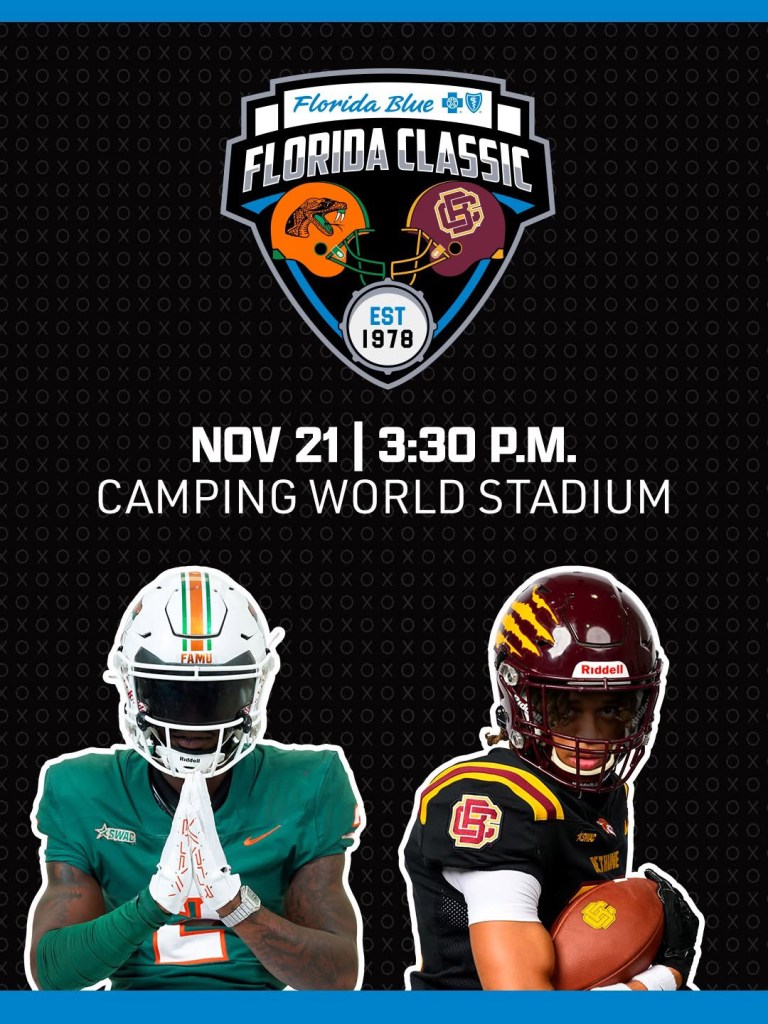
The move to the Florida Citrus Bowl, now Camping World Stadium, in 1997 ushered in an era of remarkable growth. The inaugural Orlando matchup attracted 56,351 fans. Attendance climbed to 66,245 in 1998 and 70,125 in 1999. In 2000, a crowd of 70,719 watched FAMU defeat Bethune-Cookman 31–28 in a thriller with the MEAC championship at stake. The Classic reached its attendance peak in 2003, drawing 73,358 spectators.
As the event grew, Bethune-Cookman President Dr. Oswald Bronson and FAMU President Dr. Frederick Humphries helped establish the Florida Classic Consortium. The arrangement brought the schools together to share responsibilities, with Florida Citrus Sports supporting event operations, sponsorship development and efforts to increase attendance.
In 2006, two women leading the institutions took that partnership a step further. FAMU Interim President Dr. Castell Vaughn Bryant and Bethune-Cookman President Dr. Trudie Kibbe Reed agreed to incorporate the consortium as a nonprofit organization, formalizing an equal partnership designed to maximize the Classic’s benefits for both schools.
Their decision gave the rivalry a shared business foundation. While the Rattlers and Wildcats competed fiercely on the field, their leaders recognized the value of working together to protect and strengthen an event that served both institutions.
Their professional connection continued when Bryant later worked under Reed at Bethune-Cookman. Reed also helped lead Bethune-Cookman’s transition from college to university status.
Together, Bryant and Reed left a legacy that extended beyond the scoreboard. Their vision strengthened the Florida Classic as a shared asset, demonstrating how two proud rivals could unite around a common purpose while preserving the competitive spirit that made their annual meeting special.