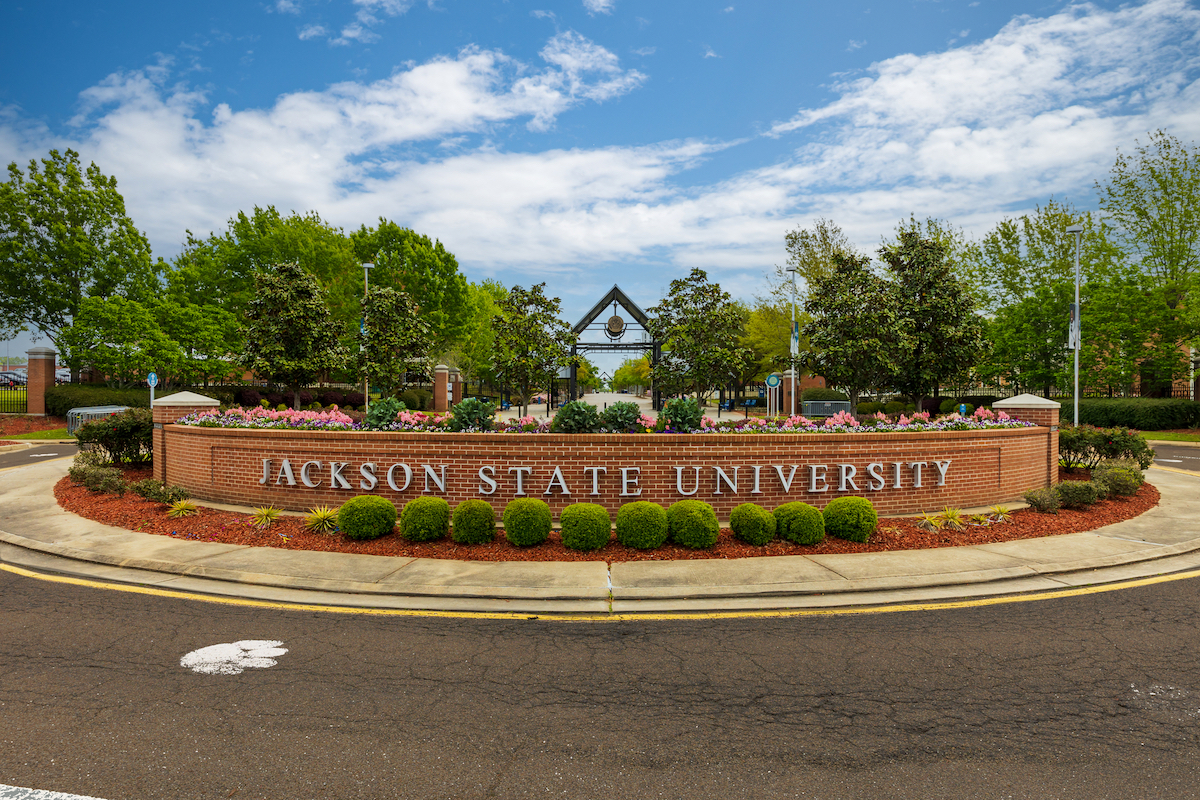

“As JSU succeeds, so does the city of Jackson and the state of Mississippi, and the collaboration positions us to drive meaningful economic growth and transformative discovery at scale,” Jackson State President Denise Jones Gregory said in an email.
Gaining the designation as one of the nation’s top research universities requires spending at least $50 million annually on research and development and awarding at least 70 research doctorates, according to the American Council on Education, which helps manage the Carnegie Classification of Institutions of Higher Education, a system used to group and rank colleges and universities.
The project Ali and his students are working on is also an example of how that research can have a broad impact. EMBRACE, funded with a $26 million, 15-year grant from the U.S. Department of the Treasury, partners JSU with Mississippi State, the University of Mississippi and the University of Southern Mississippi.
“Oyster reefs used to be a $100 million industry and prime indicator of the health of the Mississippi Gulf Coast but hurricanes, disease, seawater pollutants and other environmental factors frequently affect these habitats,” said Ali, a professor of electrical and computer engineering. “So protecting Mississippi’s culture, traditions and revenue from the Gulf is an important part of what we do here that has the potential to bring jobs and money to the state.”
In 2023, JSU spent nearly $19.5 million in research and development, said Almesha Campbell, the university’s vice president of research and economic development. Jackson State’s key research areas include cybersecurity, artificial intelligence, health disparities, materials science and civil engineering.
For JSU to reach that $50 million benchmark, the university will need to seek larger research grants, not just from the federal government, but from private industry. By partnering with the coalition, the university can gain more visibility and work with other universities who are looking to share resources.